

An Interoperable Global Digital ID for AI Humanoid Robotics
What does a post WWI 1920s League of Nations meeting have in common with the 人形机器人身份管理机制建设合作倡议 meeting that just happened in China last weekend? And why the EU could be saving themselves an exported administrative bureaucratic problem by expanding the eIDAS 2.0 Identity framework to include Humanoid Robots.
Innovation in technology often forces societies to reinvent bureaucratic administrative processes. When cars first appeared at the beginning of the 20th century, we didn’t have any of our current infrastructure like driver’s licenses, traffic lights, car registrations or mandatory emissions checks and insurance. Only after the sheer number of cars became too high to ignore and accidents became commonplace did governments begin issuing licenses to keep track of the identity of who was meant to be operating each one. As more people moved and traveled, international agreements naturally followed, eventually creating the international driving permit so drivers could operate cars across countries.
A similar administrative shift happened after World War I, when the sheer chaos of people flung around the globe and their inconsistent travel documents led the League of Nations to convene the 1920 Paris Conference on Passports. At this one meeting, representatives from dozens of countries agreed upon the standard size, format, and information contained in passports. This one meeting laid the groundwork for the bureaucratic infrastructure that would make modern global mobility possible. These two examples of identity systems didn’t come about randomly, nor did they come about in thoughtful preparation. It was just because new forces like the invention and adoption of cars, increased rail travel and politically motivated international movement made them an absolute necessity.
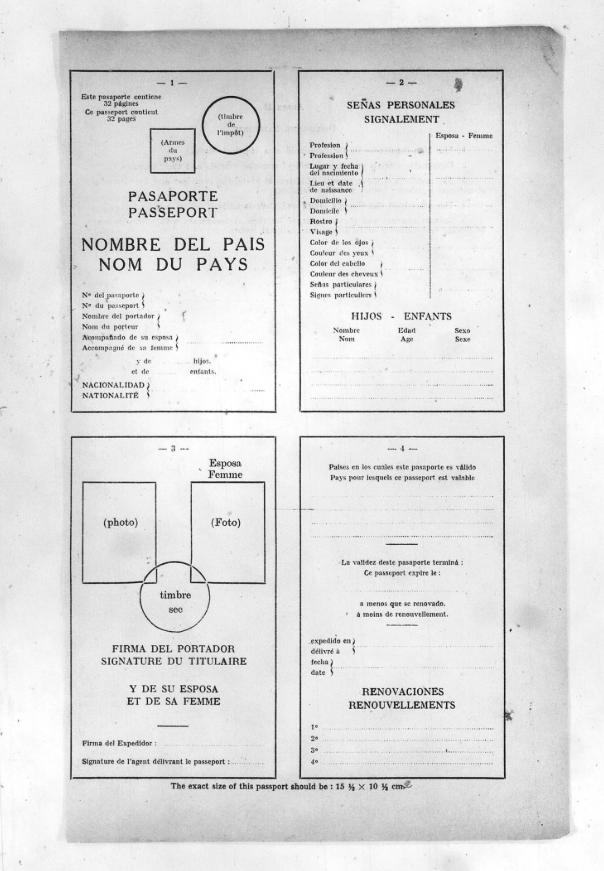
The standards agreed upon at the League of Nations Conference, 1920
A century later, humanoid robotics is poised to bring about a similar turning point. As machines are preparing to scale in number, cross borders, move through transportation systems, get jobs in workplaces, and navigate public environments autonomously or semiautonomously, we can use historical analogy as a key to understand in advance of the chaos that they will need to be identified, authenticated, and governed in an administrative manner that plugs into our existing infrastructure. That means that the biggest moment in humanoid robotics this year may not be a new hand, a better integrated LLM or the Chinese New Year Showcase but a meeting that just took place in China about Robot IDs at a conference and the document debuted at that meeting called 人形机器人身份管理机制建设合作倡议” or translated, The Cooperation Initiative on the Construction of Humanoid Robot Identity Management Mechanism.
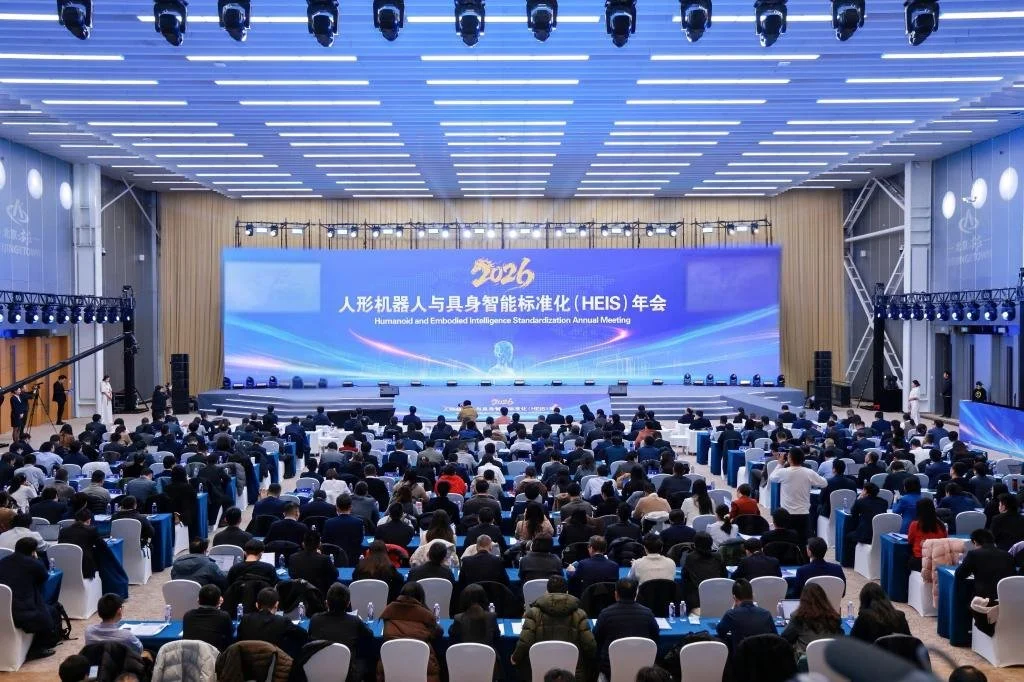
人形机器人与具身智能标准化年会现场。(受访对象供图)
In February 2026, alongside the release of its comprehensive Standard System for Humanoid Robots and Embodied Intelligence (2026 Edition), China debuted a framework for humanoid robot ID management. It is an initiative designed to build the administrative layer that would allow humanoid robots to be registered, authenticated, tracked, and governed at scale.
I have inquired over the past two years with the Austrian Government if such a registry exists and if they would be open to keeping one. I also introduced the concept of Robot ID’s during my TED Talk at TED AI in September 2025, advocating for ID’s that govern where certain robots can go and what they can do including the centralized government approvals process, registration and mandatory training for owners.


I was inspired to project this idea into the public discourse because of my experience living with a humanoid robot as part of my immersive research project. I have attempted to take it on public transport, as well as attempted to integrate it into existing legal and civic processes. The trouble I encounter is rarely technical but a result of slow administrative adjustments. My robot is not rejected for a tram ticket because it's dangerous or unable to traverse the system. It is rejected because it doesn’t exist in the bureaucratic system in a way that can facilitate its abilities. A registry and ID system has the power to lay the groundwork to change that.
An interoperable identity framework allows a robot to be more than just a metal product with a factory issued, company specific serial number. It allows it to become a governable entity, specifically one that can be authenticated, authorized, insured, permitted, restricted, and recognized across institutional boundaries. China is early to adopt, especially since so many of the robots are made there. They also have one of the highest potentials for scalability in production and deployment. They also happen to be coordinated in their efforts due to their governmental structure and national priorities. It appears they have set the sights of their innovative spirit on bureaucracy and standards in anticipation of the scalable moment in front of them.
Europe would be wise to pay attention, not to replicate the model, but to understand the infrastructural framework they have decided to use and how Europe may build on that through adjustments rather than needing to craft a framework from scratch.
When I tried to take Tova on the tram in Vienna, the issue was not whether it could stand safely or whether it posed a threat be it cyber or physical. The issue was that there was no way to get it an annual pass. I applied and inquired multiple times with the transit authority and without ID or paperwork, there was no route towards ticketing for Tova, only classification as "oversize luggage.” Without administrative language, there is no permission, no insurance classification, no liability pathway, and no interoperability. There is only doubt, hazard and ambiguity.
A framework for registration and identity does not really do anything to make a robot more intelligent on the surface of things but it does facilitate the ability for institutions to be more capable of interacting with it. Registration, authentication, ownership linkage, and permission layers aren’t glamorous features and they don’t wow the public like a kung fu robot in a fight ring but they are necessary infrastructural features for scalability. They determine whether a robot can enter a public space, access a payment system, be insured, be audited, or be held accountable.
What China appears to be building is not just the hardware they are selling domestically and exporting, but that layer of bureaucracy that could open up their world to robotic adoption and also be exported along with the hardware. By coordinating technical standards, safety frameworks, and now identification initiatives, it is treating embodied intelligence as something that will move through real systems like transport, labor, finance,and logistics. This is a massive shift and unlike the League of Nations meeting on Passports in the 1920s, they did this as one nation. Alone. Consulting their own companies, universities and experts. Without Europe. Without America. They didn’t even publish the paper produced in English. They aren’t asking for collaboration from the countries they export to in the groundwork phase but they may ask for or build in compliance once their framework is solidified.
Europe is widely considered a leader in AI regulation. The EU AI Act, product safety regimes, and GDPR are world class frameworks. They are, however, largely software-based and not necessarily embodiment-specific. They classify risk levels and regulate data security. They have not yet tackled the question of how our institutions register and identify individual robotics in a standardized manner. If China succeeds in its national humanoid identity framework, it will not just standardize its domestic industry but provide an interoperability template that other nations can plug into, especially when they are largely exporting robots from China in the first place. Identity systems, once adopted at a wide scale, tend to shape ecosystems beyond their borders in a standardized global fashion. Manufacturers design with them in mind. Exporters align with them as they ship abroad. Insurance models adapt around them to create foundational examples and cross-border operations begin to assume the same standards apply.
This is not to say that Europe just should replicate the same system because innately governance cultures in China and the EU differ greatly. Data protection philosophies could not be more different. But it does mean Europe now must frame their own layer of ID and registration in the context of an existing layer coming out of China alongside the very exported products they aim to regulate.
Europe already has digital identity infrastructure for biological humans in development through eIDAS or the Electronic Identification, Authentication and Trust Services program as well as digital wallet initiatives. In keeping with its values, the EU has a strong privacy architecture and clear accountability frameworks. A European humanoid identity system would likely emphasize data minimization, tiered credentials, and explicit separation between identity and surveillance. It might anchor robotic identity to ownership authorization and the owner’s Electronic Identification rather than having a centralized state registration solely for robots. It could embed permission layers that are transparent and revocable, echoing the way in which the EU handles personal data.
If humanoid robots are to operate across borders, whether that’s in factories, homes, hospitals, or transport systems, identity recognition will become a technical and regulatory question. Do different regions recognize and interoperate with each other’s systems? Do we require translation layers for different languages? Do we demand re-registration or a passport “stamp” or a residency permit when a robot relocates? Who takes on the responsibility of the initiative, the administrative work and the checking of such regulations?
These questions might seem like they’re out of a sci-fi film but they’re necessary in order to scale the adoption in a thoughtful and smoother manner. Living with a humanoid robot has made one thing very clear to me: the future won’t be decided only by what machines can technically do through their engineering but by how our legal system deals with them. Dexterity and autonomy are impressive technical abilities, but neither matters if a robot can’t be classified, insured, permitted, or authenticated within the bureaucratic systems that govern our world. China’s identity initiative acknowledges in front of the world that breakthroughs in embodied AI cannot exist in a vacuum but that they require administrative infrastructure. China has the benefits of being nationally coordinated, producing much of the world’s robots domestically and thinking ahead.
Europe will now have the opportunity to design its own identity infrastructure which can either plug into and mimic China’s or interoperate with it, while prioritizing privacy and rights-based governance. But the EU cannot wait until humanoid sales scale and the issue becomes too chaotic to manage in order to begin that work. The friction I experience with Tova today is small and isolated. It only impacts me and I’m merely frustrated. At scale, that same friction becomes hazardous and almost impossible to retroactively manage.
The EU needs to act preemptively to create a system that reflects its own values before the scalability of humanoid robots becomes too complex to handle or before the systems surrounding AI robotics like global transport and insurance naturally conform to China’s structure due to the physical production sourcing and early movement on regulation.